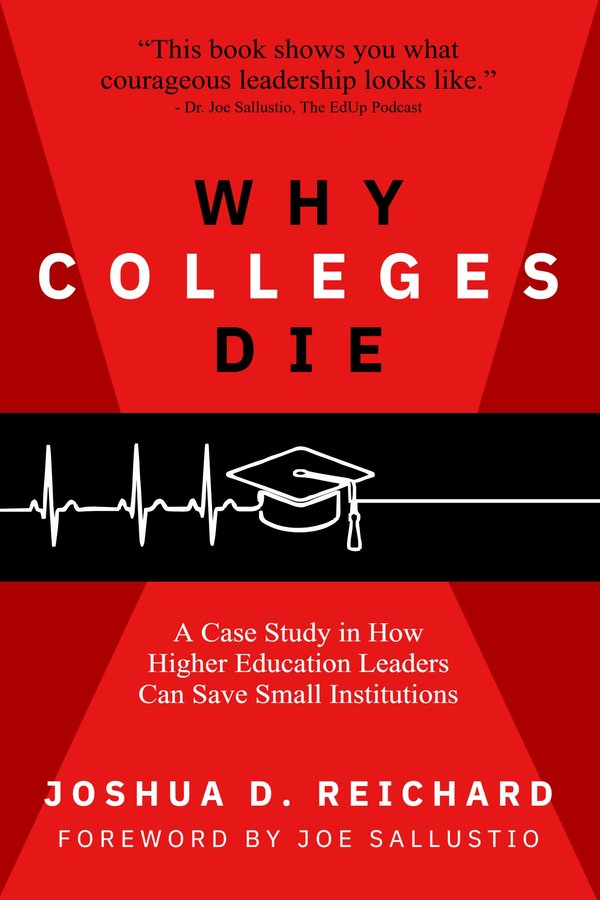
About the book
Colleges don’t die from one catastrophe
They die slowly, as weak finances, falling enrollment, deferred maintenance, unclear strategy, passive governance, and drift from mission reinforce one another until decline feels normal.
In 2018, Omega Graduate School, a small, faith-based graduate institution founded in 1981, was in an existential crisis. Enrollment had fallen to 47 students. Nearly a quarter of them were on financial hold. The school carried heavy debt, had exhausted its line of credit, and was operating out of a deteriorating campus. Then a pandemic arrived.
Joshua D. Reichard accepted the presidency without pay. Why Colleges Die is his inside account of what came next: selling most of an underused campus to retire the debt, separating governance from management, rebuilding programs around the mission rather than abandoning it, leading a digital transformation, and planning for the day the turnaround team is gone.
Inspired by Hollis L. Green’s classic Why Churches Die, each chapter pairs a recurring cause of institutional decline with a practical leadership response. The book is candid about its limits, separating documented facts from interpretation, and it says plainly that not every college should survive. Deciding whether to renew, merge, or close is part of responsible stewardship too.